


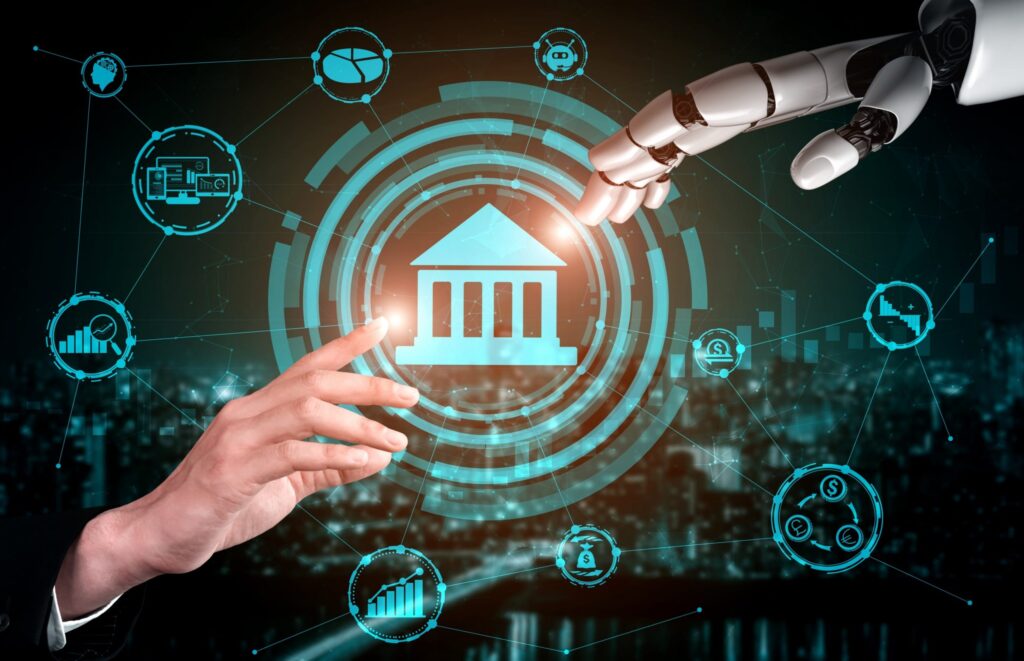
The year 2026 shall be an important year in the development of AI. What once worked behind the scenes in applications now boldly enters real-world settings such as automated homes, self-driving cars on city streets, industrial robots in factories, and even bank conference rooms that have typically been conservative. We are entering a new phase where AI becomes more than just a tool; it’s now involved in decision-making.
Reports from the Digital Watch Observatory and Forbes say that, in homes, autonomous AI agents are starting to manage mundane tasks such as scheduling meetings, organizing logistics, and speaking with smart home devices. What seemed like a fantasy only a few years ago has started to become normal. Indeed, the most significant change is taking place in one of the most cautious and regulated sectors: banking.
Banking at the Edge of a New Evolution

According to a report by PwC dated 2025, more than 60% of major banks in Southeast Asia have already implemented AI into three key areas: fraud detection, instant credit scoring, and personalized customer services. This change is no longer a choice; it has become essential.
But AI also opens new doors. Mortgage approvals that once took several days, or even weeks, can now be done in seconds. Customers get investment recommendations that better match their risk profiles.
Yet with great power comes great challenge. The OECD warns that AI-driven decisions can be biased, and not auditable. “Banks must ensure that their AI systems are transparent, accountable, and non-discriminatory,” the report emphasizes. “Transparency is now a prerequisite for trust.”
Shifts in Occupations: Fading and Newly Emerging

Behind these efficiency gains are some significant changes in the nature of the workforce. According to a 2025 study by McKinsey Global Institute, almost 30% of administrative jobs could be lost to automation by 2030. Yet, much like in previous industrial revolutions, this wave of innovation is introducing new employment opportunities.
There is an emerging need in the financial sector for professionals like AI model auditors, AI ethics officers, and algorithm-based risk analysts. In Indonesia, for instance, digital banks are forming their own data science teams to develop more inclusive AI-powered credit models for millennials and Gen Z.
But AI’s influence reaches far beyond industries; it reshapes geopolitics. The United States, China, and the European Union are tightening export controls on AI chips, treating them as strategic commodities, just like oil in the 20th century. Meanwhile, AI-generated synthetic propaganda has emerged as a new tool in international political contests.
Closing Thoughts:
Another pressing issue is the energy consumption. According to the International Energy Agency, global electricity usage by data centers will reach 1,000 TWh by 2026-a level consistent with Japan’s overall annual power consumption. The consequences of such demands are that FinTech companies must look for more efficient algorithms and renewable sources of energy. Conclusion: Change is accelerating, and the banking sector is faced with a clear choice: leading through innovation or risking falling behind in a competitively demanding global landscape. The year 2026 is more than a date; it forms an era where AI reshapes the future of finance and global power relations.

